
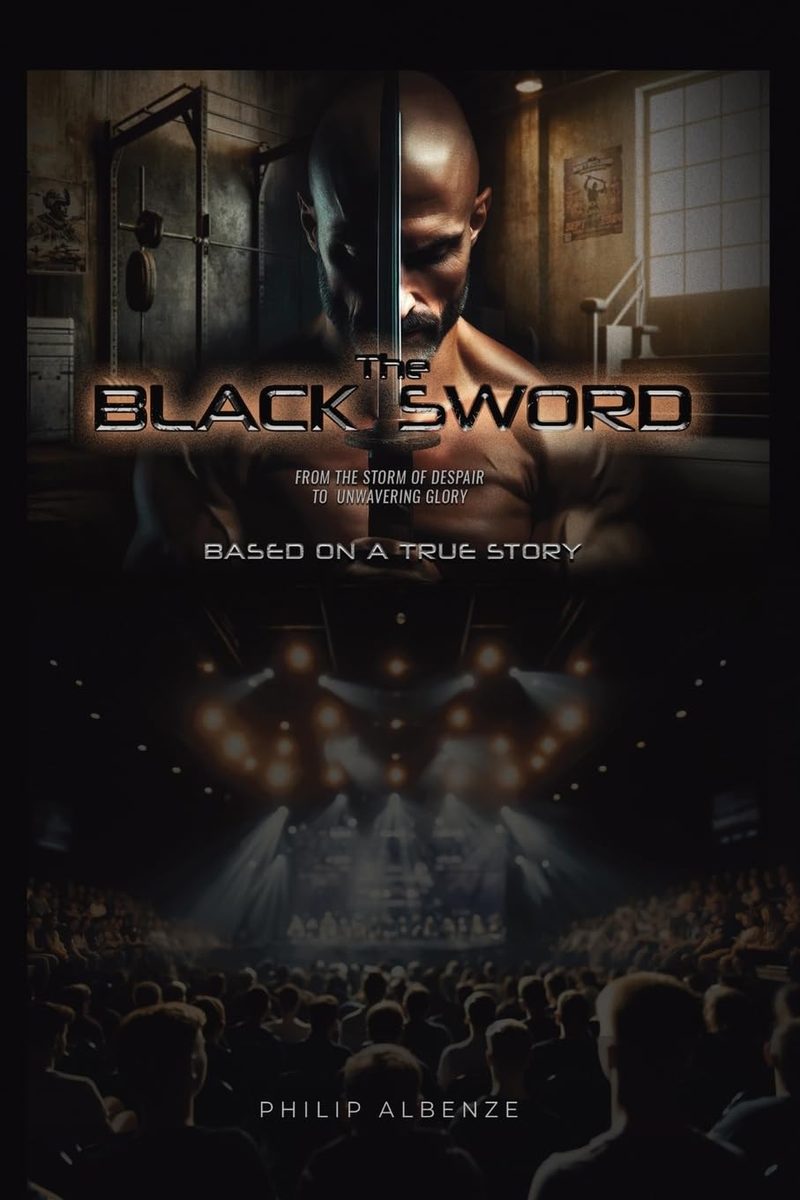
From the storm of despair to unwavering glory
The Black Sword
The Incredible True Story of One Man's Fight Against Obesity and Addiction to Becoming a Champion
Videos · Training and habits
Phil speaks alone in this podcast episode about why no single workout or nutrition template works for everyone. He warns that online videos claiming one correct way to train can cause injuries, mentioning a young man a friend saw become paralyzed after following an influencer's advice. He advises beginners to know their limitations, start very light or with just the bar, treat pain as a warning sign rather than following 'no pain, no gain', and modify exercises that hurt. He says nutrition plans must fit each person's allergies, likes, job and routine, compares each person to a combination lock found by trial and error, and suggests seeking out a trainer or someone with a record of success.
Watch on YouTube.
And the key to everything when you're starting off is light. Go very, very light.
05:44
Pain is your body's warning sign that you're doing something wrong.
06:45
no pain, no gain, which is a term I absolutely hate and never use
06:45
Nine out of 10 times when a weight is hurting you, it's too heavy.
07:17
So even if you find something that's working for you, don't expect that to last you forever.
11:28
Find that balance that is perfect for you. And be safe.
13:33
From YouTube's automatic captions, so a few words may be wrong.
00:01 This is not a comfort podcast. This is a confrontation. If you're looking for soft motivation, easy answers, or permission to stay the same, this isn't for you. This is for those who've been overweight, addicted, broken, finally tired of making peace with their own excuses. Here, we choose discipline over comfort, faith over feelings, action over intention. We train the body, sharpen the mind, and rebuild the spirit. One hard decision at a time.
00:31 This is where the old you ends and the stronger one is earned. This is the Body by Phil podcast. Welcome back to the Body by Phil podcast. This is Phil. In today's episode, I wanted to talk a little bit about something that I see that's deeply concerning. And I'm going to call this episode one size does not fit all. And that saying, we hear it all the time, one size doesn't fit all. That
01:02 could not be more accurate when when you're dealing with the topic of fitness, diet, working with restrictions. In this game of physical fitness, you cannot use just one simple template as a means to the end. And what do I mean by that? Well, first of all, I I love the fact that we have so much information at our fingertips now. We could look up anything at any time when
01:34 it pertains to nutrition. What should we eat? counting macros, counting calories, what is our basil metabolic rate, what is our fat content, what you know, what should we eat, what should we stay away from, intermittent fasting, what diet is right this week, right? Um, how to perform certain exercises, what weight should I use, how many reps do I want to do to be lean or to bulk. It is absolutely endless. And I know when I
02:05 was first starting up in in fitness and training, basically I did whatever my trainer told me to do and and that was pretty much it. But today, we have a wealth of information at our fingertips, which sounds wonderful if the wealth of information you're getting is correct. And this is where things get really tricky. In my experience, you cannot just take a cookie cutter workout, a cookie cutter
02:38 nutrition outline that somebody may have had success with and make it your own. There's always fundamentals. People ask me all the time, they say, "Why don't you do more instructional videos on the proper way of lifting, on the on the proper nutrition?" because I I really don't think that there's any possible way to do that. Um, like I said, there are there are fundamentals, but there is so many ways to go about doing an exercise that's
03:09 right for a specific person. There's so many ways of taking in food and counting macros or or calories depending on your goal. If you do want to gain weight, bodybuilding, if you want to trim off body fat, there's just no way to do that and say, "Here guys, follow this. I found the magic formula for everybody." It just doesn't work that way. And as alarming as that is, what I see that's
03:39 even more staggeringly concerning is people are getting injured, people are getting hurt, and people are actually dying um over misinformation that's being spread out there. One thing to be very weary of is when you see a video that has an absolute end. Okay, you it'll show you a a picture of a person, usually very fit, male or female. They look perfect. So
04:10 immediately it grabs your attention. You think, "Okay, these people know what they're talking about because I want to look like that." That would have got my attention immediately, too. So, you're going to listen and do exactly what what they say to do. Where this becomes a problem, especially if you've never really worked out or you've never really had any kind of training and you watch this video. I'm going to use a squat for example because squats and deadlifts have again my opinion and my experience the highest probability of injury when
04:42 done incorrectly. So say you're watching a squat and you want to you want to work on your legs and your glutes. So you see this person do this weight. They'll tell you based on your age, based on your body weight, you can lift x amount of weight. Okay? So, people get in there, they put the weight on the rack, they unhook, they stand, and they drop straight down and get hurt. Um, we had um a person, I just saw this online the other day from
05:12 a friend of mine and he actually witnessed this happen at at another facility and the young man is now paralyzed because of listening to an influencer, an online expert. And you know, this is just absolute tragedy. So, how do we avoid something like this? Well, okay, you want to know your body. You need to know where your limitations are. Obviously, if you have knee pain, knee issues, back pain, you want to stay away
05:44 from certain exercises. They're going to put a tremendous amount of pressure in those areas. And the key to everything when you're starting off is light. Go very, very light. Use just the bar. mimic the the routine uh without any weight. Just get in front of a mirror and practice that movement so that you feel comfortable actually mechanically that your body can even perform and move that particular way before you start even adding any weight. And
06:15 when when you see a video again, the warning signs I see right away that are red flags. If you're watching and you see somebody perform something, just say for an example, it's a bicep curl, okay? And you show somebody standing here and they come up and they say that's the only way to do that exercise. And if you do it any other way, it's wrong. They throw a big red X on the screen and they say you can't do it that way. Here's the problem. Say you have a wrist injury or
06:45 an elbow um situation and coming up like that hurts. Pain is your body's warning sign that you're doing something wrong. So, but if you're watching an influencer or you're watching somebody that tells you no pain, no gain, which is a term I absolutely hate and never use, uh, then you're just going to assume that you're feeling what you should be feeling. And you're, if you have an injury and you're trying to work through that pain, you're just going to further damage your body and further inflame that injury rather
07:17 than listening to you and saying, "Okay, this doesn't hurt. Maybe I need to modify this some way." And then play with a modification. say the straight bar is really hurting. So you switch over to an easy bar, that curved bar, and you go, "Okay, that doesn't hurt at all. It took the pressure." Nine out of 10 times it's the weight. Nine out of 10 times when a weight is hurting you, it's too heavy. Um the reps are wrong. Say you're you're trying to you're trying to gain size, so you want to do six to eight reps, but it's too heavy and your body isn't accustomed to doing that.
07:48 This is a equation to almost guarantee you getting hurt. Again, I'm talking about when you're starting out, when you're more experienced and you know, you know, you could add weight and get different results, but you have to be very, very careful about watching these absolute videos that say you must do this, you cannot do that. And let's be fair, I mean, I'm almost 57 years old. I can't I can't do some of these things that that I see people doing, you know, but I know from experience that I
08:19 shouldn't I shouldn't be doing some of this stuff. So you know and even even at my experience level injuries come you know mistakes happen. You come in one day and you want to work really hard and you know your knee hurts or your you know your your arms or shoulders hurt. So you have to be very in tune with your body and listen to you not so much a training video. This applies to food too. I mean fitness is one thing. We all
08:50 have the same, you know, we have have different restrictions of age, weight, goal, ability, injuries. These all factor in to how to perform sensible workouts for ourselves based again on our goal. This applies with nutrition. There is no just one sizefits-all with nutrition. So, people say, "Can you just write me up a plan?" uh for my goal. We can, but we have to
09:23 sit there and and dissect that. We can't just take what worked for this person and just apply it to you because there's things to consider. There's a variety of things to consider, allergies, food likes, dislikes, your per your daily job, your routine. If you know you can't be cooking in a kitchen when you're at work, so how what do you do? You know, you have to talk about meal prep. You have to talk about substituting your nutrition through, you know, shakes
09:54 if you need to. If you're trying to get that nutrition in and you don't have time to eat a meal, you don't want you want to get nutrition in without skipping meals. You want to talk about is intermittent fasting right for me? How many meals a day should I eat? What is my portion? The it's endless on what you should, you know, how you can go about writing the right one for you. I use I tell people this and I think this is a really good analogy that I like to apply this principle to people when it comes to nutrition and workout plans that we are all individually a
10:26 combination lock you know not two people to be able to unlock that that lock using different different combinations. So you have to sit there and you have to figure out what is the right combination that will unlock my potential that will help me succeed in my personal goal, whatever that may be. And there's trial and error. You're not going to sit there, watch something or study it, learn it, write it down, and think, "Jackpot, I got it. This is it. I finally did it."
10:57 You'll try it. If you're having success with your diet and your exercise based on your goals, a lot of people it's weight loss, right? So, if you're if you're seeing the number change on the scale and you're feeling better, lock that in. Whatever you're doing is working, okay? So, don't go too dramatic with your change. At some point, you may or may not hit a plateau. Your body kind of gets used to what you're doing and it'll slow down a little bit in that change. And that's when you want to
11:28 re-evaluate. Maybe I need to add more cardio, maybe I need to pull out more carbs, maybe I need to add more protein, and so on. So even if you find something that's working for you, don't expect that to last you forever. That will most likely change as your body continues to change and as your goals continue to change. So again guys, I just want you to be really weary of following things that you see online that
11:58 guarantee the result, but everything has to be done just like this, not that. You're not a a one-sizefits-all. Everybody is different. We are all individuals and we will respond differently. We're not the same age. We're not the same body makeup genetically. We don't have the same physiology. Everything about us is different. We're not going to respond to the same um workouts versus the same diet based on our daily life. How many times a week
12:31 can you train? How many hours can you put in per week? Nutrition. It has to fit into your lifestyle. So, do your research. You know, research. And I guess some really good advice is to reach out to people that actually, you know, you know that they've had success with people, okay? Go to uh a trainer or or find somebody that you know that maybe had success and talk to them rather than somebody you don't know or just a video you've seen because the
13:01 worst thing you can do too, you know, you you want to keep yourself safe. So if you try an exercise and you're have that in my mind in your mindset that okay well you know no pain no gain this is supposed to hurt. No it's not supposed to hurt aside from the casual soreness and the discomfort which is fitness you know discomfort for sure but never pain. Pain is not a good idea and you don't want to keep your body there. And the same thing with nutrition. You know if it sounds too good to be true it probably is. There's balance in
13:33 everything and fitness is that perfect balance. Find that balance that is perfect for you. And be safe. Be very careful with how you go about doing this. Baby step it when in doubt. Lightweight body movements until you get uh your body accustomed to that movement so that you keep your body safe. Don't forget to like and subscribe to uh Body Body by Phil. uh keep you updated with new content and uh we'll see you next
14:05 time. Be safe.
From the storm of despair to unwavering glory
The Incredible True Story of One Man's Fight Against Obesity and Addiction to Becoming a Champion
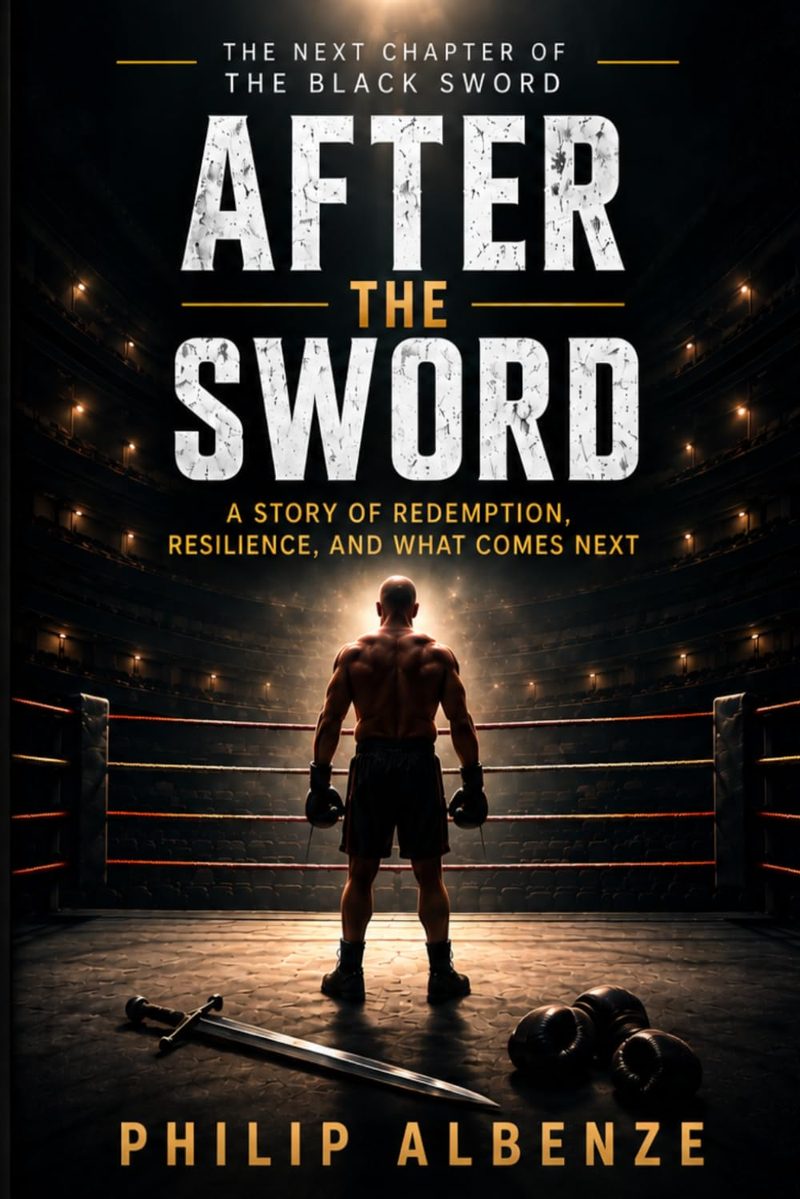
The next chapter of The Black Sword
A Story of Redemption, Resilience, and What Comes Next


