Addiction recovery speaker
An addiction recovery speaker who lived every chapter
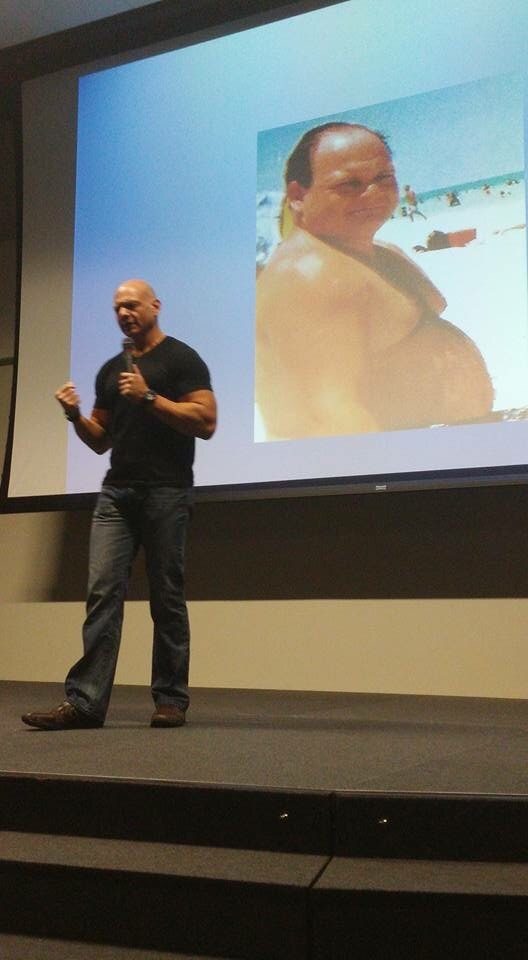
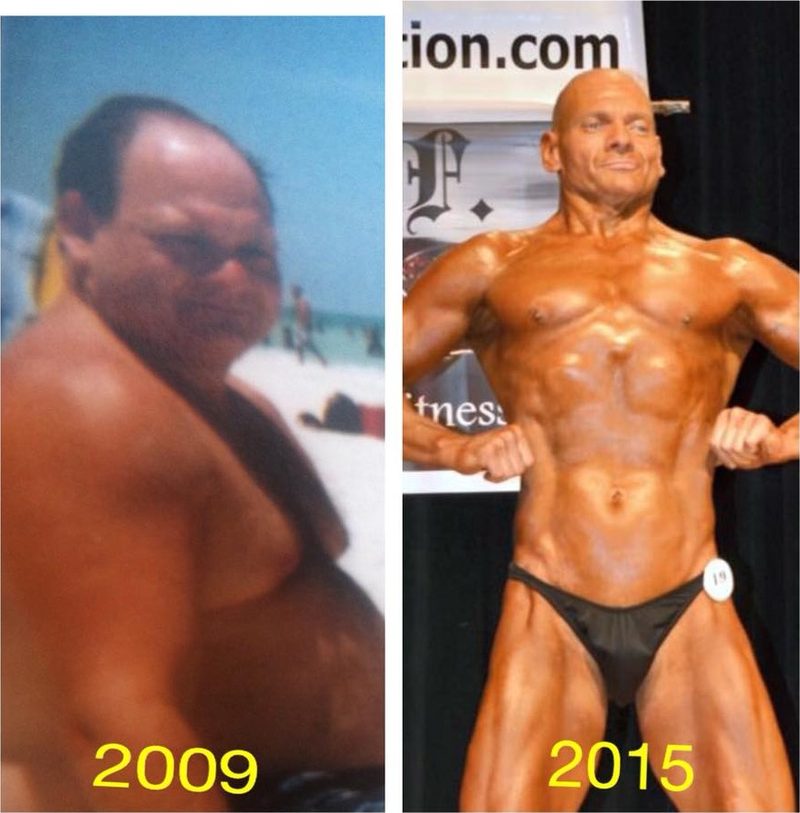
Phil Albenze was a functional alcoholic for twenty years. He held a job, drank 24 to 30 beers a night, ate fast food by the bag, picked up three DUIs and was shot on New Year's Eve 2002. Then he quit drinking cold turkey, lost about 140 pounds in a year and became a champion natural bodybuilder. Recovery centers, schools and colleges book him to tell that story to people still inside it.
What addiction looked like from the inside
Phil describes the pattern without softening it. He would drink until the early morning, wake up sick, throw up, and go to work anyway. "I did this for 20 years," he says on his podcast. "You know, I was always able to hold a job. I was becoming what I know now to be a functional alcoholic."
The only breaks came when he was too sick to drink. The people around him drank the way he did, because anyone who didn't would say something about it. He was shy by nature, and alcohol gave him what he calls liquid courage. Food was a second addiction he didn't recognize until he was in his 300s: "It wasn't so much the food itself. It was trying to fill some sort of absence or void in my life."
The bill came due in court and in hospitals. His first DUI meant a couple of days in jail, his second a longer stay, his third a couple of months. In 2009 a doctor told him the inside of his body was like a 70-year-old man's, and his nine-year-old son cried in the exam room.
How he got out, and stayed out
He quit drinking cold turkey. About a year in, when relapse started to worry him, he started going to AA meetings, got a sponsor and worked the twelve steps, which he now recommends for any impulse-control problem, from gambling to food. He replaced the bottle with a barbell and a trainer, six days a week.
His definition of addiction is the one he uses on stage: "not having the impulse control to stop doing something that's causing us pain or suffering or causing some sort of loss or problem in our life." His advice about the people and places that keep someone using is blunt: "If there's something that's dragging you down, something that's keeping you from being the best version of you, kill it. Get rid of it at any cost."
What a recovery talk covers
Talks run up to an hour. When California Palms Addiction Recovery Campus billed his 2019 evening there, its flyer promised his story "of battling obesity and alcoholism to what motivated his transformation and commitment to helping others."
The themes are the ones he returns to on his podcast: the drinking that got out of hand after the Army, the jail stays, the shooting, the doctor's office, and the day he walked into a gym and said "I need help" to a stranger. Then the practical part of early sobriety: replacing one habit with another, cutting off the people who pull you back, and the twelve-step work he started a year in.
He is open about why asking for help took him so long. "I came up old school in an Italian family and being the oldest male, first male. Asking for help was often looked at as a sign of weakness," he says.
And he talks about the people he trains now, because his recovery turned into helping others: a blind man another gym turned away, a woman who started at 71, an amputee who lost his leg at 51.
Recovery audiences he has spoken to
- Otterbein University4 talks, about 200 each people
- Human Resource Association of Central Ohio (HRACO)1 talk, 600 people
- California Palms Addiction & Recovery Center3 talks, 100 to 150 each people
- Mahoning County Career & Technical Center (MCCTC)3 talks, 100 to 150 each people
- Boardman Middle School1 talk, 200 people
- Hubbard High School1 talk, 200 people
- Trumbull Career & Technical Center (TCTC)1 talk, 100 people
- Rotary Club1 talk, 50 to 60 people
California Palms Addiction Recovery Campus in Austintown has hosted him three times, including "A Night With Phil Albenze" on August 17, 2019.
Hear him before you book him
Every episode of his podcast has a full transcript on this site. These three are closest to a recovery talk.


Recovery episodes of his podcast
- Battling Addiction and Taking Your Life Back: a day in the life of a functional alcoholic, quitting cold turkey, finding AA a year later, and why you have to walk away from the people who keep you using.
- The Turning Point: the doctor's office, his son's question, and the first time he said "I need help."
- How I Traded a Bottle for a Barbell: replacing one addiction with a habit that builds you up instead.
- Earning Your Second Chance: a wall of black bricks for alcohol, drugs, laziness, fear and self-loathing, swapped one at a time for red ones.
- From Jail Cell to Stage: three DUIs and the five lessons he took from them.
- The War Within: the silent fight with alcohol and obesity, and why even Rocky had a trainer.
Where Phil travels as an addiction recovery speaker
Phil lives in Austintown, Ohio, and focuses on recovery events within about 200 miles of Youngstown. In Ohio, see his Ohio addiction recovery speaker page. These cities have their own page, with local recovery boards and overdose figures:
- Addiction recovery speaker in Youngstown, OH (4 miles)
- Addiction recovery speaker in Warren, OH (10 miles)
- Addiction recovery speaker in Canton, OH (40 miles)
- Addiction recovery speaker in Akron, OH (41 miles)
- Addiction recovery speaker in Cleveland, OH (57 miles)
- Addiction recovery speaker in Pittsburgh, PA (60 miles)
- Addiction recovery speaker in Wheeling, WV (72 miles)
- Addiction recovery speaker in Erie, PA (78 miles)
- Addiction recovery speaker in Morgantown, WV (110 miles)
- Addiction recovery speaker in Columbus, OH (143 miles)
- Addiction recovery speaker in Detroit, MI (147 miles)
- Addiction recovery speaker in State College, PA (151 miles)
- Addiction recovery speaker in Toledo, OH (151 miles)
- Addiction recovery speaker in Buffalo, NY (156 miles)
Questions from recovery centers
Is Phil in recovery himself?
Yes. He drank for more than twenty years, quit cold turkey, and later worked the twelve steps with a sponsor. He also struggled with food addiction and still talks about it.
Does he talk about drugs as well as alcohol?
Yes. Alcohol was his main addiction, but he describes it as a drug, alcohol and food addiction over twenty years, and the twelve-step approach he recommends applies to any of them.
How long is the talk?
Up to an hour.
Where does he travel?
Phil lives in Austintown, Ohio, near Youngstown, and travels to speak in any state. His focus is events within about 200 miles: Cleveland, Akron, Columbus, Pittsburgh, Erie, Buffalo and the cities between. See where he speaks.
Is there a book that goes with the talk?
The Black Sword is the full story the talk comes from, in paperback, Kindle and audiobook.
Has Phil spoken at a recovery center before?
Yes. California Palms Addiction & Recovery Center in Austintown, Ohio, has hosted him three times, to 100 to 150 people each time, including an evening billed as "A Night With Phil Albenze" in August 2019.
Does Phil work with people in recovery outside of talks?
Yes. He trains people at his gym, Body by Phil, and the back cover of The Black Sword notes that he counsels people who struggle with drug and alcohol addiction.
Book Phil for your recovery event
Send your date, audience and city, or call (330) 314-0228.