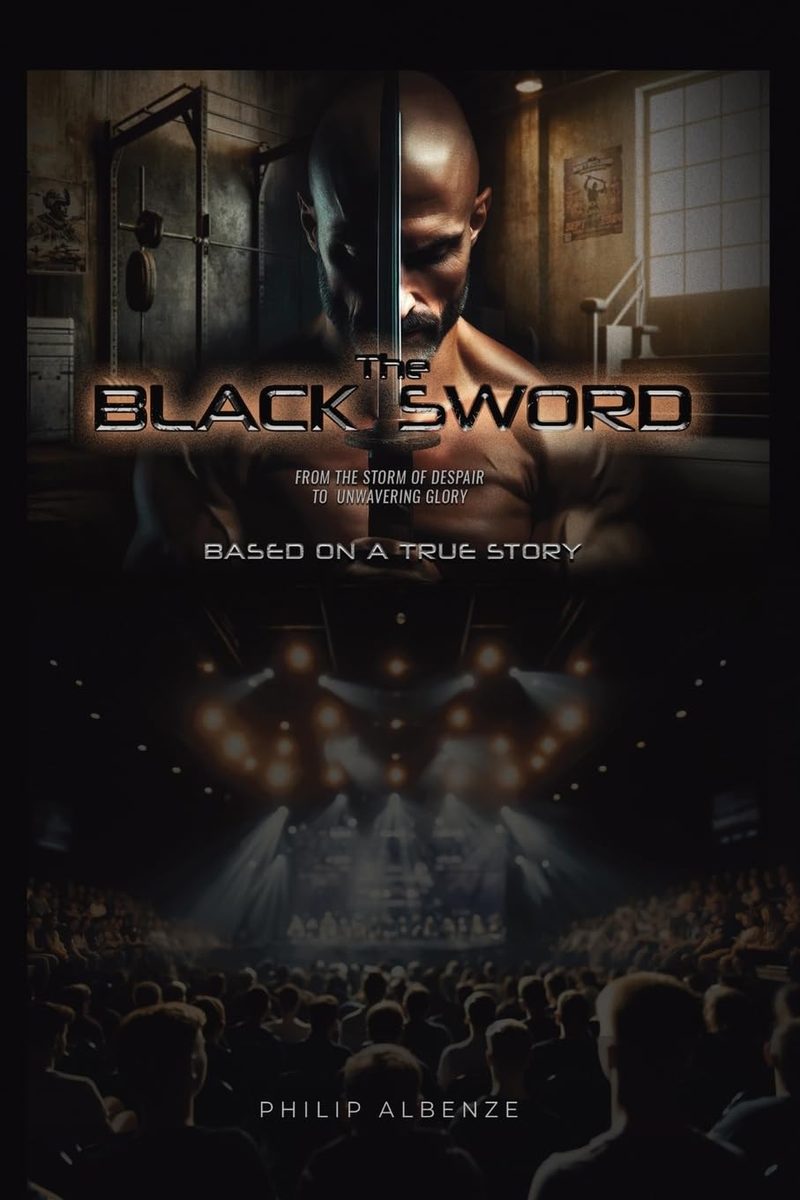
An addiction recovery memoir
An alcoholism memoir from twenty years inside it
The Black Sword is Philip Albenze's account of more than two decades of alcohol and food addiction, and of getting out. He wrote it while running his own gym in Austintown, Ohio, where some of the people he trains are fighting the same battle.
What kind of recovery memoir it is
Phil's turning point came in a doctor's exam room in 2009, at 304 pounds, with his nine-year-old son listening. The doctor called him a ticking bomb. On the drive home Phil pulled into a gym he had passed every day on his way to the liquor store and said, for the first time in his life, "I need help."
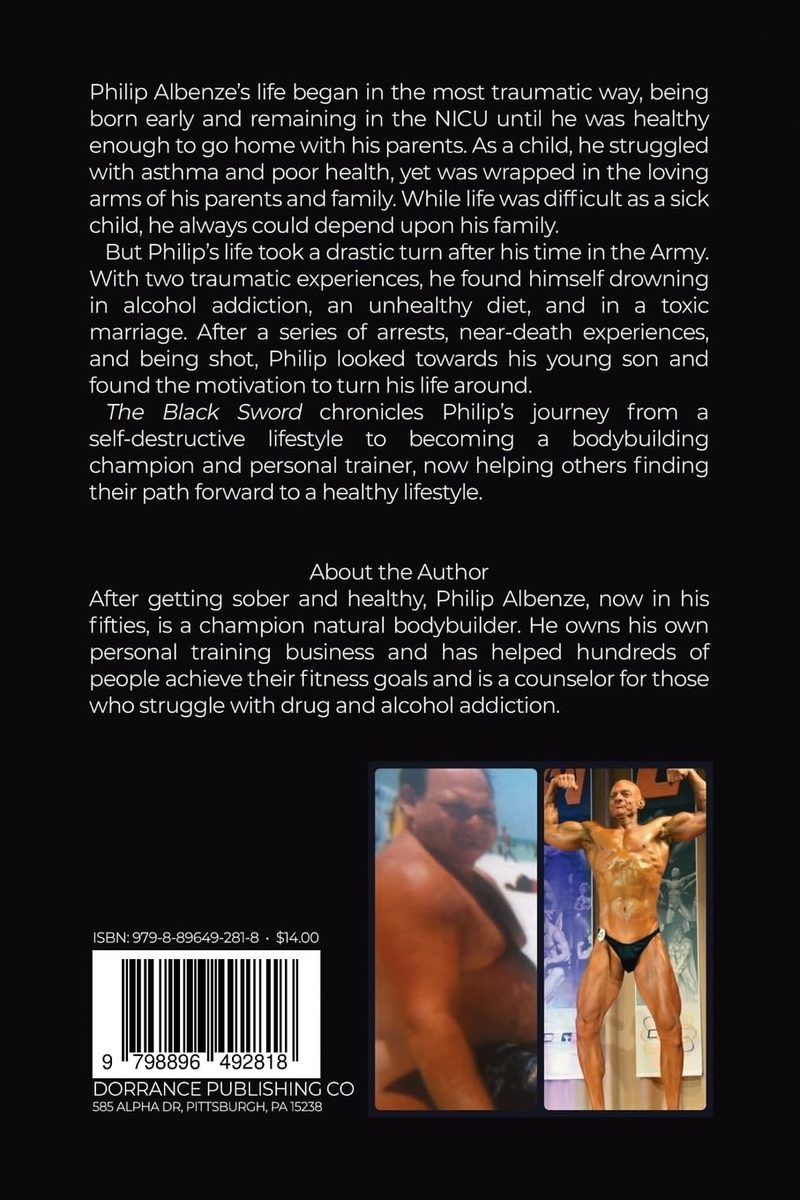
What follows is a recovery built on a barbell as much as on meetings. He quit drinking cold turkey. About a year sober, when relapse started to worry him, he found AA, a sponsor and the twelve steps. He traded the nightly 24 to 30 beers for six days a week with a trainer, lost about 140 pounds in the first year, and in 2015 won the trophy the book is named for.
The years before
The back cover names them: the Army, "two traumatic experiences," alcohol addiction, an unhealthy diet, a toxic marriage, and "a series of arrests, near-death experiences, and being shot." On his podcast Phil fills in the rest. He came out of the Army in 1993 and the drinking "really got out of hand." He was a functional alcoholic who always held a job, a shy man who used alcohol as courage, a binge eater who didn't know food could be an addiction. There were three DUIs, each with time in jail, and a shooting on New Year's Eve 2002 that nearly killed him.
"I regret wasting 20 years of not believing in myself and not taking that chance," he says on his podcast. The book is the record of the chance he took.
Who it's for
Someone in early recovery who needs to see the long version of the story. A family member trying to understand why the person they love keeps going back. A man who was taught that asking for help is weakness: "I came up old school in an Italian family and being the oldest male, first male. Asking for help was often looked at as a sign of weakness." And anyone carrying a second addiction, to food, under the first.
The sequel
After the Sword (2026) covers the years after: a life of purpose, fitness and faith, Masters boxing in his fifties, his wife Kim, fatherhood, forgiveness and faith, and the clients he trains through their own battles.


Questions about the memoir
Is The Black Sword a true story?
Yes. It is Philip Albenze's own life. The cover says "Based on a true story."
Is it about alcohol or drugs?
Mostly alcohol, with food addiction alongside it. Phil describes twenty years of drug and alcohol addiction in total.
Is it a long read?
No. The paperback is 98 pages, and the unabridged audiobook runs 3 hours 34 minutes.
Does it talk about AA and the twelve steps?
Phil found AA about a year after he quit drinking, got a sponsor and worked the steps. He recommends the twelve-step approach for any addiction.